
Community Response Officers vs. Traditional Security
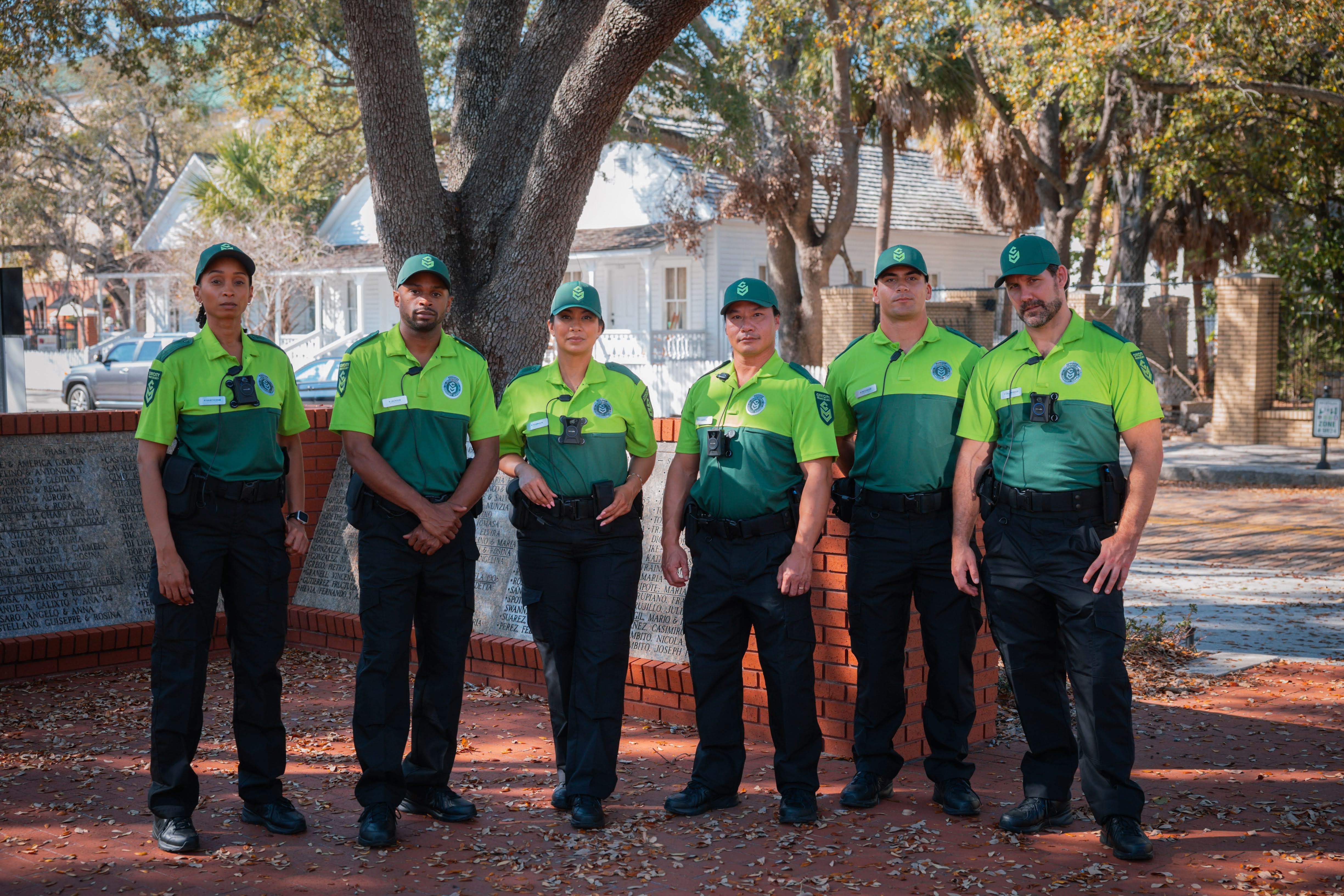
Civicity’s CRO model emphasizes community, problem-solving solutions built for public spaces
If you ask Steve Saunders what separates Civicity’s Community Response Officers (CROs) from traditional security, he points to a single word: community.
“The key to Civicity is community response,” he said.
Civicity, the newly launched public security company from Block by Block, builds on the organization’s mission of improving public spaces—this time with a focused approach to safety and security. Saunders, a retired Cincinnati Police Department captain with 33 years of service, now serves as Vice President of Security Strategy overseeing the effort.
“Unlike traditional security, which often protects property within a defined space, Civicity’s Community Response Officers are embedded in the districts they serve safeguarding the experience of being in a public space.
“Traditional security is the eyes and ears on the inside of a space,” Saunders said. “CROs are out in the community—walking, visible, and helping people feel safe while supporting local businesses.”
CROs also represent a step beyond Block by Block’s existing Safety Ambassadors. While Ambassadors focus on patrols, outreach, and business engagement, CROs are trained to take a more active role in addressing issues as they arise.
“What Safety Ambassadors do now is great,” Saunders said. “But CROs are more involved in problem solving. This is about identifying an issue, analyzing it, and developing a response.”
This elevated model extends to every aspect of the role—from equipment to training to uniforms. By emphasizing visibility. CROs can reinforce a sense of security through presence alone.
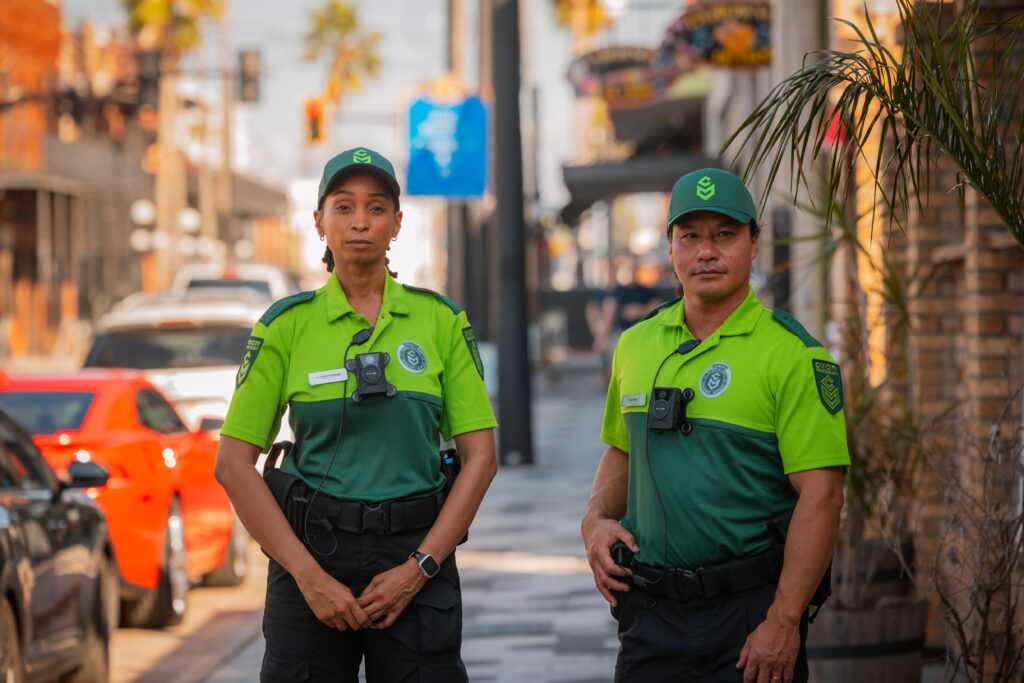
“Having a body in a uniform carries a feeling of safety and responsibility,” Saunders said. “That visibility can deter problems before they start.”
Although unarmed, CROs are equipped with body cameras, communication tools, and pepper spray. More importantly, their training emphasizes de-escalation and decision-making.
“The number one tool a CRO can have is emotional intelligence,” Saunders said. “It’s about thinking through problems and responding in a way that prevents escalation.”
CROs are trained to look beyond immediate incidents and focus on underlying causes. They work with cities, businesses, and community partners to improve conditions, connect unhoused individuals with resources, and reduce recurring issues.
“We’re looking at what’s causing problems and how to address them,” Saunders said. “That lets us work together to reduce or eliminate them over time.”
And CROs are designed to complement, not replace, law enforcement.
“Many departments don’t have the bandwidth for traditional beat policing,” Saunders said. “Our CROs can act as force multipliers, providing additional visibility and engagement.” Because of this, relationships with local police tend to be collaborative and positive.
Training combines virtual reality simulations with real-world scenarios to prepare CROs for complex interactions.
“Our goal is adaptability,” Saunders said. “We want CROs to be ready to engage with people who may be disruptive or experiencing mental health challenges—and to do so safely and effectively.”
Civicity was developed in response to growing demand from clients seeking expanded safety solutions.
“We know there’s a need,” Saunders said. “And we’re ready to meet it.”
Civicity CROs vs. Traditional Security Models
| Civicity Community Response Officer (CRO) | Traditional Security | |
| Core Purpose | Protects the experience of public spaces ensuring people feel safe, welcome, and confident | Focuses primarily on protecting property within a defined space |
| Approach to Safety | Human-centered, engagement-first approach built for modern public environments | Typically, enforcement and observation-focused within a set area |
| Presence in the Community | Highly visible, approachable, and actively engaged in the public realm | Often positioned as a static or reactive presence within a property |
| Response to Issues | Proactively identifies, assesses, and resolves issues in real time | Often observes and reports, with escalation handled externally |
| Handling Complex Situations | Trained in de-escalation, behavioral health awareness, and community-based problem solving | Not typically designed for complex public-space challenges like disorder or quality-of-life issues |
| Community Impact | Focuses on building trust, improving perception, and supporting long-term outcomes | Focuses on incident prevention and response within a defined scope |
| Role in Public Spaces | Embedded in the community supporting residents, visitors, and businesses | Typically assigned to a specific property or asset |
| Problem-Solving Approach | Addresses root causes and partners with outreach and stakeholders to reduce recurring issues | Primarily addresses individual incidents as they occur |
| Training & Skillset | Purpose-built training in communication, emotional intelligence, and real-world scenarios | Often based on standardized guard training models |
| Team & Deployment Model | Coordinated, team-based units designed for coverage, flexibility, and rapid response | Often utilizes individual posts or isolated coverage |
| Technology & Accountability | Supported by real-time reporting, body cameras, and data-driven insights | May rely on basic reporting with limited transparency or data visibility |
| Overall Outcome | Creates safer, more welcoming, and more vibrant public spaces | Provides security coverage for defined assets and locations |